Lithium Fire Suppression System

Lithium battery incidents are increasing across aviation, transportation, commercial buildings, industrial operations, and public environments. Conventional response methods often focus on visible flame reduction, but lithium battery thermal runaway presents a far more complex danger: extreme heat, re-ignition risk, toxic off-gassing, and rapid cell-to-cell propagation.


The Lithium Fire Suppression System was developed to address that challenge directly.


This system is engineered to provide immediate suppression action on contact, helping interrupt propagation and reduce the severity of lithium battery fire events before they escalate into a larger life-safety and operational crisis.

The Real Challenge

Thermal Runaway in lithium batteries presents a serious safety risk because damaged, overheated, defective, or improperly charged batteries can rapidly ignite, produce intense heat, toxic smoke, and explosive fire propagation from cell to cell.

The Problem

Lithium Battery Fires Are Different

Lithium battery fires are not conventional fires.


Class A B C Extinguishers will not put it out. BurnBags introduces more risks and may increase possibilities of explosion 

The Solution

The Lithium Fire Suppression System is designed specifically for lithium battery fire events where traditional methods may be insufficient on their own.


It's engineering allows to access source of the Lithium Fire even if it is in narrow hard to reach place

Captain John Cox


John Cox is widely recognized for his authoritative media reporting on the hazards of lithium batteries. His globally respected Emergency Response Planning Company also specializes in responding to incidents caused by thermal runaway events.


Captain John Cox of Safety Operating Systems discusses the safety aspects and dangers related to lithium battery fires on-board passenger and cargo aircraft.  


The fire and heat can be devastating but the smoke and vapors from a single PED battery fire will impair vision and breathing.  The vapors emanating from the Li-ion battery of a personal electronic device in thermal runaway are not only mucous membrane irritants but are also poisonous!


John Cox Discusses the Dangers of On-Board Lithium Battery Fires


Captain John Cox

CEO, SOS - Aviation Emergency Response Planning


Firefighting increases stress factor

As a career firefighter, I have witnessed firsthand how lithium battery thermal runaway incidents have fundamentally changed the fire environment across every industry.


These fires are unlike traditional fires—they escalate rapidly, generate extreme heat, reignite unpredictably, and produce highly toxic smoke and explosive cell-to-cell propagation that place both the public and first responders at serious risk. From electric vehicles and mobility devices to aircraft, ships, warehouses, homes, and portable electronics, lithium battery incidents are increasing at a pace that is outgrowing conventional firefighting tactics and suppression methods.


Firefighters are often forced into close-contact response situations involving unstable devices that can violently reignite without warning. The growing prevalence of lithium-powered technology demands safer, faster, and more effective suppression solutions that reduce responder exposure, minimize propagation, and support modern emergency response operations.


John McMillan

Professional Firefighter and Safety Specialist


FAA statements in its Guidance

Lithium batteries “pose significant risk to aviation safety” due to overheating and fire potential


“Current FAA guidance acknowledges that lithium battery events are not conventional fires—they require immediate suppression, sustained cooling, and prevention of propagation. This defines a gap between existing tools and the operational need.”


“The FAA has clearly identified lithium batteries as a growing aviation safety risk, with documented incidents involving smoke, fire, and extreme heat. FAA guidance emphasizes that extinguishment alone is insufficient—cooling and prevention of re-ignition are critical to resolving the hazard.”


Source: Extracted from FAA Guidance


LITHIUM FIRE SUPPRESSION SYSTEM

THE SOLUTION

Purpose-Built for Lithium Battery Thermal Runaway


The Lithium Fire Suppression System is an extinguisher designed specifically for lithium battery fire events where traditional methods may be insufficient on their own.


Unlike containment bags or conventional extinguishers, LFSS is designed as a true no-touch, no-handling suppression solution intended to immediately interrupt propagation from cell to cell while rapidly reducing heat and minimizing re-ignition risk.


Key Benefits


Immediate suppression action.


Designed to act rapidly on contact to support fire knockdown and reduce escalation.


Propagation risk reduction


Helps interrupt the spread from one affected cell or device to adjacent cells or materials.


No-touch response advantage


Supports safer intervention where direct handling of a burning or overheating device may increase danger.


Reduced operational exposure


Aims to minimize damage, downtime, crew risk, passenger risk, and facility disruption.


Compact and deployable


Engineered for environments where space, access, and response speed are critical.
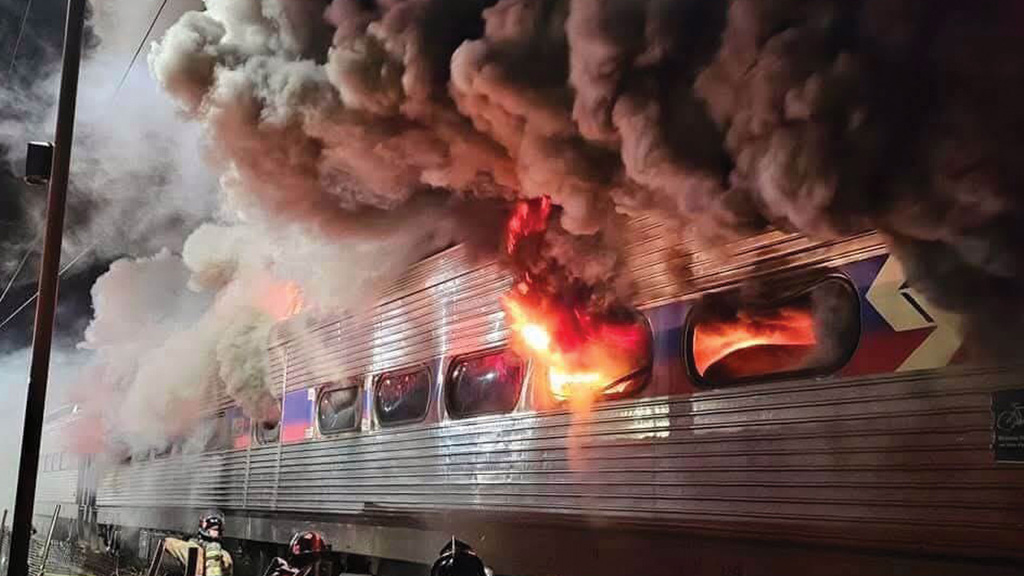
Transportation

Lithium battery thermal runaway aboard rail systems can rapidly escalate into toxic smoke, fire propagation, passenger evacuation risks, and operational disruption.


Aviation

In aviation it presents a critical in-flight emergency, requiring immediate response to extreme heat, toxic smoke, fire propagation, and potential aircraft operational disruption.
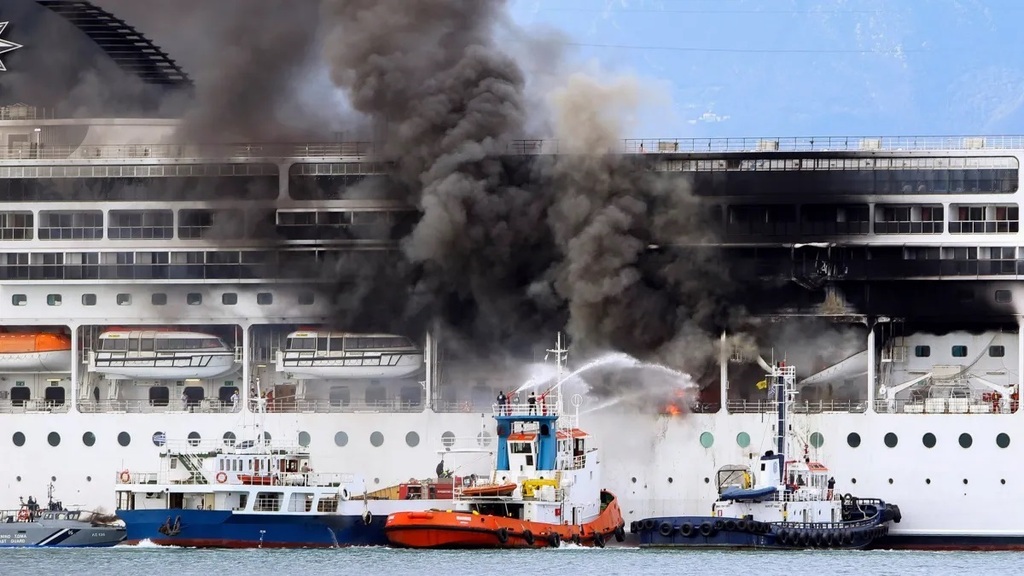
Maritime

Aboard cruise ships Lithium batteries presents a significant passenger safety hazard, requiring immediate emergency response to toxic smoke, fire propagation, and confined-space evacuation risks.

Transportation

Lithium Fire Suppression System addresses the growing safety threat of lithium battery thermal runaway events within the rail industry, including passenger trains, subway systems, maintenance operations, battery storage areas, e-bikes, mobility devices, and portable electronic equipment. In enclosed rail cars, tunnels, stations, and operational compartments, thermal runaway can rapidly generate extreme heat, dense toxic smoke, and explosive cell-to-cell propagation, creating serious risks to passengers, crew members, evacuation procedures, and critical transportation infrastructure.


Traditional response methods often require direct handling of the device, increasing exposure and injury risk to personnel.


LFSS is designed as a no-touch, no-handling suppression solution intended to immediately stop propagation, rapidly reduce heat, and minimize re-ignition risk—supporting proactive risk mitigation, passenger safety, and emergency response preparedness throughout rail operations.

Aviation

Lithium Fire Suppression System addresses one of the most critical and rapidly growing safety threats in aviation today: lithium battery thermal runaway events involving passenger devices, power banks, electronic flight bags, maintenance equipment, cargo shipments, and onboard operational electronics.


Within the confined environment of an aircraft, thermal runaway can rapidly generate extreme heat, violent cell-to-cell propagation, toxic smoke, and dangerous fire conditions that threaten passengers, crew members, cockpit visibility, aircraft systems, and safe flight operations.


Traditional response methods often require direct handling or movement of the device, increasing exposure risks to crew members while creating potential escalation during flight.


LFSS is designed as a no-touch, no-handling suppression solution intended to immediately interrupt propagation, rapidly reduce heat, and minimize re-ignition risk—supporting aviation safety, regulatory guidance, crew protection, and proactive risk mitigation throughout commercial, corporate, cargo, and general aviation operations.

Maritime

Lithium Fire Suppression System addresses one of the most critical and rapidly growing safety threats in aviation today: lithium battery thermal runaway events involving passenger devices, power banks, electronic flight bags, maintenance equipment, cargo shipments, and onboard operational electronics. Within the confined environment of an aircraft, thermal runaway can rapidly generate extreme heat, violent cell-to-cell propagation, toxic smoke, and dangerous fire conditions that threaten passengers, crew members, cockpit visibility, aircraft systems, and safe flight operations.


Traditional response methods often require direct handling or movement of the device, increasing exposure risks to crew members while creating potential escalation during flight.


LFSS is designed as a no-touch, no-handling suppression solution intended to immediately interrupt propagation, rapidly reduce heat, and minimize re-ignition risk—supporting aviation safety, regulatory guidance, crew protection, and proactive risk mitigation throughout commercial, corporate, cargo, and general aviation operations.

Our approach

FIrst time Customer

Requirement Analysis

  • Establishing needs
  • e-Learning
  • Consulting
  • 24/7 support

Analysis and consulting surveillance program

Quarterly Assesment

  • Managed Predictive Provisioning
  • Customized e-Learning
  • Consulting Package
  • Bi yearly Seminar
  • 24/7 support

cONTACT us